
Diecast Scale Guide: 1:18, 1:24, 1:43, 1:64 and 1:87 Explained

The short answer: a diecast scale such as 1:18 means the model is one-eighteenth the size of the real vehicle. The bigger the second number, the smaller the model. A 1:18 car is roughly 10 inches long, a 1:24 about 7½ inches, and a 1:64 car fits in the palm of your hand.
What does diecast scale mean?
Scale is a ratio between the model and the real thing. In 1:18, every inch of model stands for 18 inches of real vehicle. "1/18", "1:18" and "1 18" all mean the same thing.
The ratio also explains the most common point of confusion: 1:18 is larger than 1:24, even though 18 is the smaller number. Think of it as a fraction. One-eighteenth is more than one-twenty-fourth.
Diecast scales compared
For a typical 15-foot (180-inch) car, the models come out like this:
| Scale | Approx. length | Best known for |
|---|---|---|
| 1:18 | 10 in | Maximum detail; display centerpieces |
| 1:24 | 7½ in | Good detail at a friendlier size |
| 1:43 | 4¼ in | Compact, traditional collector scale |
| 1:64 | 2¾ in | Small, affordable, easy to collect in volume |
| 1:87 | 2 in | Tiny; matches HO model-railroad scale |
Lengths are calculated from a 180-inch vehicle. Real vehicles vary, so a pickup or a tractor-trailer will measure longer.
Which scale is right for you?
If you want the most detail, choose 1:18. The larger body leaves room for finer paint, interior detail and, on many models, opening parts.
Opening parts vary, even within one brand. It comes down to who built the original mold and whether the company using that mold decided to keep the parts opening or seal them. Resin models have no opening parts at all, but they show line detail and paint quality that diecast only rarely achieves. The best approach is to check each listing to confirm which features and opening parts a model has.
If you are just starting out, start with your space. Collections can get addictive, and they can easily overwhelm the room you have. Every scale has plenty of cars, so you are likely to find your favorites in any of them. Just make sure the scale you choose can handle the inevitable growth of your collection. At 1:64 a whole collection can fit in a single case, while a 1:18 collection needs real shelf space.
Some collectors take a different approach and collect one car in every scale available. I see this often with the Aston Martins featured in the James Bond films.
From the merchant's desk
The biggest surprise for newer collectors is the difference between a 1:64 car and a 1:64 semi truck. It is easy to assume they will look about the same size side by side. But think of pulling your car up next to a semi on the highway: it is not only the cab that is bigger. Then you have to add the trailer. A 1:64 semi with its trailer is quite a bit longer than a 1:64 Porsche. As a rough guide, a 70-foot tractor-trailer works out to about 13 inches at 1:64, while a 15-foot sports car is under 3 inches. Photos can hide real size, so the table above is worth a look before you order.
A model in each scale
Here is what the five scales look like at Fairfield Collectibles. Browse the full range in each size: 1:18 diecast, 1:24 diecast, 1:43 diecast, 1:64 diecast and 1:87 diecast.
-
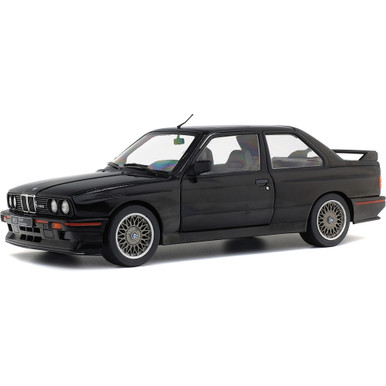 1:18 1990 BMW E30 M3 Sport EVO - Glanzschwarz
-
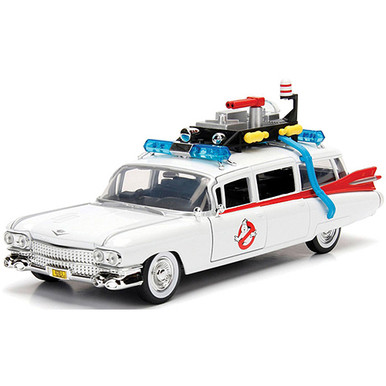 1:24 1959 Ghostbusters Ecto-1 Cadillac
-
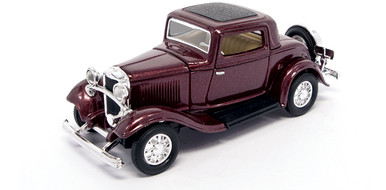 1:43 1932 Ford 3-Window Coupe - Burgundy
-
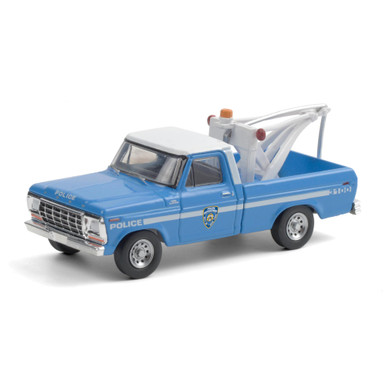 1:64 1979 Ford NYPD F-250 with Drop in Tow Hook
-
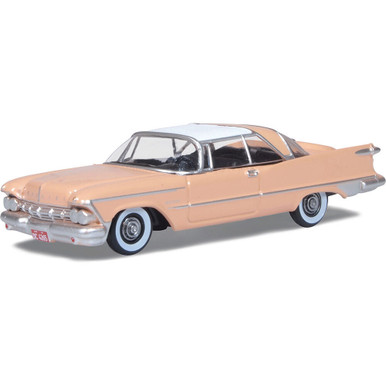 1:87 1959 Imperial Crown Coupe - Persian Pink / White
Common questions
Is 1:18 bigger than 1:24?
Yes. 1:18 is larger. The model is one-eighteenth of real size versus one twenty-fourth, so a 1:18 car is about 10 inches long and a 1:24 about 7½.
What is the most popular diecast scale?
For larger models it is close between 1:24 and 1:18. At Fairfield Collectibles, those two scales lead lifetime sales by a wide margin (as of October 2026). In my view, more new models are released in 1:24 all the time, so it is likely to become the most collected of the larger scales. I also see 1:64 gaining quickly with collectors of all ages, and I expect it to become the dominant scale.
What does 1/64 scale mean?
The model is one sixty-fourth of the real vehicle's size, about 2¾ inches for a typical car. This is the size of most small toy-style cars, and it is a popular size for collectors who want variety on limited shelf space.
Do all models in the same scale come out the same size?
Very close, but not identical. A pickup truck or a bus is longer than a compact car, so two 1:24 models can differ in length by an inch or more. Scale applies to the vehicle, not to a fixed model size.