Images of War: Tanks and Armour in the Battle for Moscow - (9781036122775)
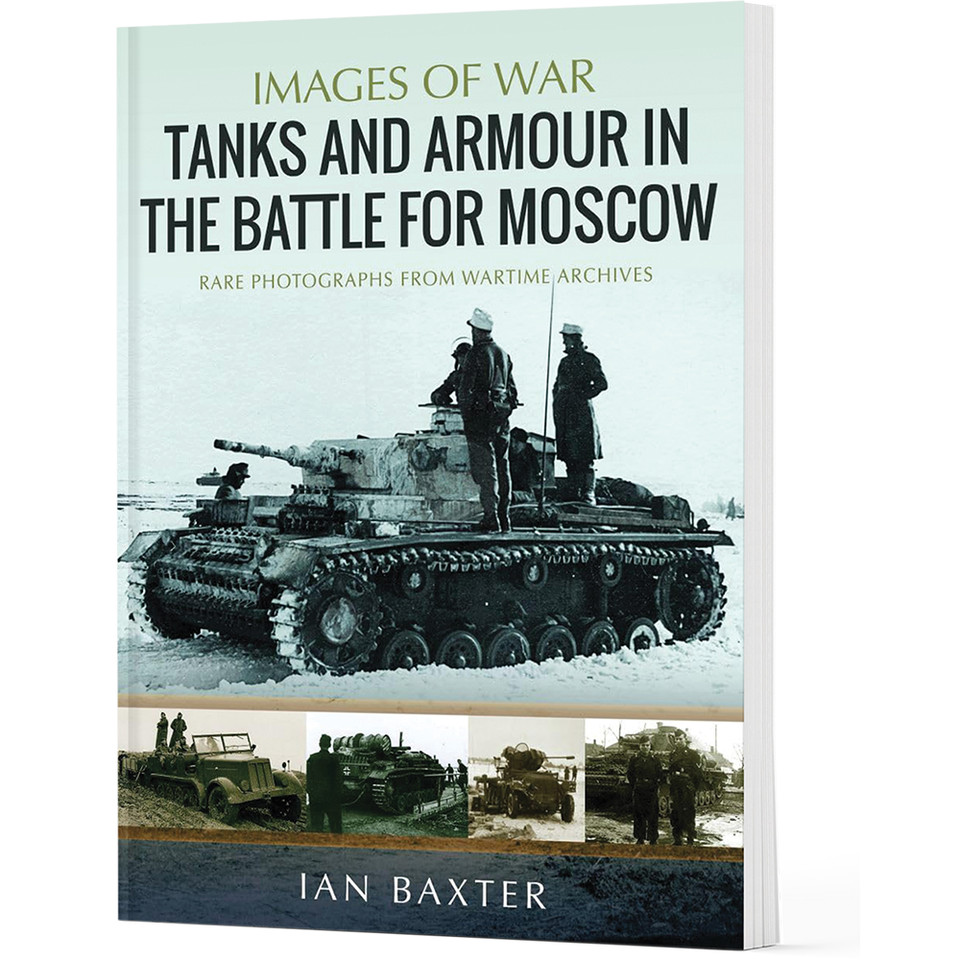
Spanning a 370-mile front 3rd and 4th Panzer Armies in the north and 2nd Panzer Army in the south surged towards Moscow in a vast pincer movement with hundreds of tanks and assault guns in tow relying on the familiar tactics of Blitzkrieg. But what followed was no lightning war. Instead German tanks and infantry were dragged into a gruelling battle of attrition during the coldest recorded winter of the twentieth century. Snowbound and under-supplied with entire units freezing to death the offensive ground to a halt before the gates of the capital.
Tanks and Armour in the Battle for Moscow offers a compelling visual account of the Panzerwaffe's doomed advance on Moscow drawing on over 130 rare and unpublished wartime photographs. Through detailed captions and expert narrative it follows the campaign from its faltering restart in the spring of 1942 to the bloody Rzhev-Sychyovka offensive and beyond charting how the Germans lost the initiative on the Eastern Front. By early 1943 any hope of capturing Moscow had vanished and a protracted retreat westward had begun - one that would not end until the Reich itself lay in ruins.
Features
- 128 pages
- Over 200 photos and illustrations
- Softcover
- Book dimensions are 6.75 x 9.75
Spanning a 370-mile front 3rd and 4th Panzer Armies in the north and 2nd Panzer Army in the south surged towards Moscow in a vast pincer movement with hundreds of tanks and assault guns in tow relying on the familiar tactics of Blitzkrieg. But what followed was no lightning war. Instead German tanks and infantry were dragged into a gruelling battle of attrition during the coldest recorded winter of the twentieth century. Snowbound and under-supplied with entire units freezing to death the offensive ground to a halt before the gates of the capital.
Tanks and Armour in the Battle for Moscow offers a compelling visual account of the Panzerwaffe's doomed advance on Moscow drawing on over 130 rare and unpublished wartime photographs. Through detailed captions and expert narrative it follows the campaign from its faltering restart in the spring of 1942 to the bloody Rzhev-Sychyovka offensive and beyond charting how the Germans lost the initiative on the Eastern Front. By early 1943 any hope of capturing Moscow had vanished and a protracted retreat westward had begun - one that would not end until the Reich itself lay in ruins.